On
its homepage and brochures, the Nifrel aquarium describes itself as a “living
museum”. After walking through this new
and fancy facility, one comes to the conclusion that the “museum” reference is to
“art museum” rather than “natural history museum” or “science museum”. The facility has two floors and is divided
into what is promoted as “seven zones moving your sensitivity”. Granted, some zones are visually striking and
have a certain amount of appeal to the aesthetic senses, but the overall
facility seems a bit stingy in terms of providing information about the aquatic
creatures and their natural environments. I will describe the zones in the order that visitors
encounter them.
“Colors”
This first zone features soft
lighting which slowly changes color from blue to red to yellow to green. 


There are 13 tanks in this zone, each about the size of a large home aquarium, and each contains creatures that appear to have been chosen mainly for their distinctive colors. Small explanation cards in each tank provide only basic information about each species.


“Abilities”
Upon entering this large room,
one feels the sensation of walking into a school science laboratory. The lighting is bright and stark, and the
specimen tanks of various sizes have limited features and are arranged in a
layout designed for ease of observation and viewing. The emphasis in this
section seems to be on showcasing each creature’s unique physical characteristics,
with minimal effort expended to replicate natural environments. 


The below exhibit housed two horseshoe crabs. There were only a handful of objects placed in the tank and no sand or other surface material. It seemed quite barren.


This shark tank was about 5 meters long by 5 meters wide and about 1 meter deep. The two tawny nurse sharks in this tank looked like they were about 2.5 to 3 meters long, and appeared to be of a docile nature. Since there wasn’t a cover on the tank, I will deduce that these sharks don’t do any jumping.


The adjacent tank was about 4 meters wide by 5 meters long and about 1.5 meters deep. It contained a zebra shark, a pelagic ray, a giant grouper, and a large humphead wrasse. This display was also quite simple with few decorative features.

“Shapes”
Entering this room felt like
walking into some kind of science-fiction space movie. This room was dark, with
the main lighting sources being the tanks themselves. The room also featured
full-length mirrored walls which created the illusion that the room was many
times larger than it actually was. The
inhabitants of each tank appeared to have been chosen for their unique body
shapes, and as in the previous zones, the small explanation cards located in
each tank provided only a little information about the fascinating residents
wherein.


“Wonder Moments”
This
large two-storied room featured an art installation that included a 10-minute
video projected onto a giant mirror-ball hanging from the ceiling. It is in this section where visitors use an
escalator to ascend from the first floor to the second floor.

“Waterside”
This zone was separated into
two distinct areas. The first of the two
areas featured tanks housing creatures found in fresh water environments. The
overall green lighting in this room helped create a very peaceful and relaxing
atmosphere. Additionally, the tanks in
this room had simulated environments featuring the use of green plants.


The
second room of the waterside zone featured 3 enclosures each housing a single large
animal: a white tiger, a pygmy hippopotamus, and a saltwater crocodile. And although the spaces provided for each of
these animals were the largest in this facility, they somehow seemed to be relatively
small considering the size of the resident creatures.

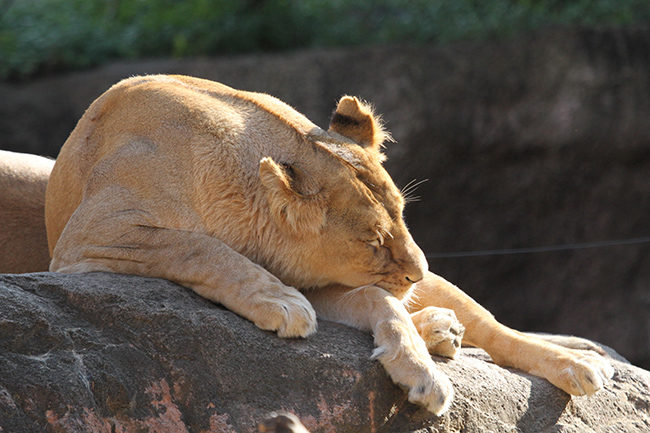
The inclusion of a white tiger in this collection seemed to be a bit questionable. The animal seemed somewhat out-of-place and inconsistent with the other aquatic exhibits of this particular aquarium. One might imagine that it was included in this collection mainly because of its ability to attract paying visitors who will buy lots of white tiger merchandise. Also to be considered is the issue of whether the inclusion of a color-morph animal might teach visitors the wrong lessons regarding wildlife conservation. (Because of the negative aspects and health risks associated with intentionally inbreeding animals to achieve rare color-morphs like white tigers, many zoos do not keep white tigers.) Whatever the reasons for including a white tiger here, it slept for most of the 30 minutes or so that I spent in front of his enclosure.


The large tank for the salt-water crocodile seemed like it was designed to be a swimming pool for humans.

Pygmy hippopotamus


“Behavior”
This
zone was designed to allow visitors to get extremely close to a number of small
mammals and birds.


American beaver


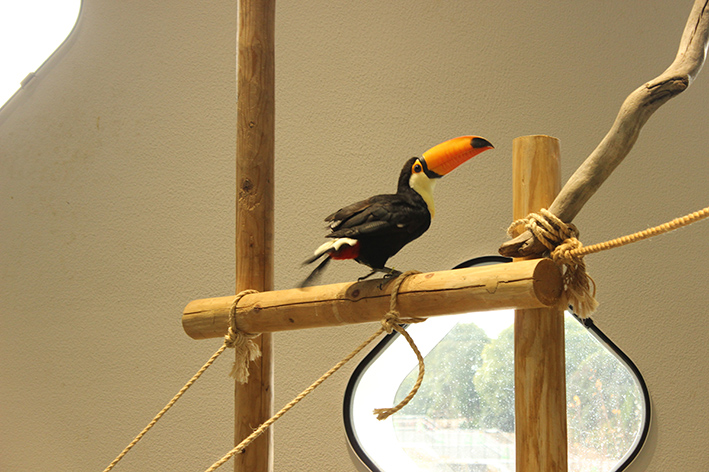
Open area with Capybaras and various species of birds such as Toco toucans, Green turacos, Victoria crowned pigeons, and Burrowing owls.


African penguins


White
pelicans


“Biodiversity”
This last zone was a
mini-theatre which showed a short film showcasing different types of animals in
various environments. I thought it was
artistically interesting, but short of animal information.
Food and Souvenirs
There was a food concession on
the second floor in the area near the white tiger/ pygmy hippopotamus/
salt-water crocodile enclosures.

Beef and lotus root burger with French fries and a Coca-cola: 1,150 yen.

In order to exit the aquarium, visitors must walk through the souvenir shop.

There was a great abundance of white tiger-themed goods: stuffed animals, cookies, pencils, etc.

Getting There

Visitors
should take the Osaka Monorail to the “Banpaku Kinen Kouen” station. After exiting the ticket gates, turn left and
walk down the sloping ramp. Nifrel is
directly in front of you. Admission for
adults and high school students was 1900 yen.
Children in elementary school and intermediate school got in for 1000 yen. Children not yet in school but 3
years old or over got in for 600 yen.
Nifrel is also part of the EXPO CITY shopping mall complex where
visitors can find many places to eat or shop.
(Note:
All photos taken in this post were taken during a visit on January 7, 2016. The comments in this post are based on
observations made on that day.
Conditions may have since changed.
Please check it out for yourself!)